Designing a Smart Store: How to Build an AI Retail Strategy for Brick-and-Mortar
For years, retailers viewed stores primarily as places to sell products, while digital channels became the source of customer data, behavioural insights, and continuous optimisation. Today, that distinction is disappearing. Advances in artificial intelligence (AI), computer vision, connected devices, and retail analytics are allowing physical stores to become intelligent environments that continuously generate operational insights and support better decision-making.
This shift is about far more than introducing new technology. The most successful retailers are using AI to solve practical business problems: improving on-shelf availability, reducing manual work, optimising store layouts, increasing planogram compliance, and delivering more consistent customer experiences.
In other words, becoming a smart store isn’t about adding AI for the sake of innovation. It’s about creating a retail environment where data flows continuously between planning and execution, enabling teams to make faster, better-informed decisions.
This is where a well-defined AI retail strategy becomes essential. Rather than investing in disconnected technologies, leading retailers begin with clear operational objectives before selecting the AI capabilities needed to achieve them. Whether the goal is improving inventory accuracy, optimising assortments, increasing labour productivity, or strengthening execution at shelf level, AI should support measurable business outcomes rather than operate as another standalone system.
Within this guide, we’ll explore the technologies shaping modern smart stores, where they create measurable value, and how retailers can develop an AI strategy that supports long-term operational improvement.
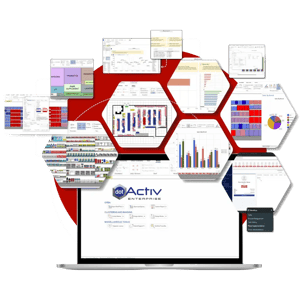
Where relevant, we’ll also highlight how solutions such as DotActiv’s Nova, Lola, and TrueView support category management, planogram automation, retail analytics, and in-store execution as part of a broader AI-enabled retail ecosystem.
1. Building the Operational Foundation of a Smart Store
Many retailers immediately think of cashierless checkout, interactive mirrors, or shopping apps when discussing smart stores.
In reality, the biggest opportunities often exist behind the scenes.
Customers may never notice improved inventory accuracy, better labour planning, or more efficient replenishment processes, but they certainly notice when products are unavailable, shelves are poorly maintained, or staff cannot assist them.
For this reason, successful AI strategies typically begin with operational excellence before customer-facing innovation.
AI Inventory Management: From Periodic Checks to Continuous Visibility
Inventory remains one of retail’s biggest operational challenges.
Traditional inventory management relies on periodic stock counts, manual shelf inspections, and historical sales reports. While these processes provide valuable information, they only capture a snapshot in time. Between stock checks, products may sell out, be misplaced, or never reach the shelf.
AI enables retailers to move towards continuous inventory visibility.
Using technologies such as computer vision, RFID, electronic shelf labels (ESLs), IoT sensors, and integrated inventory systems, retailers can monitor shelf conditions far more frequently than manual processes allow.
For example, computer vision systems can analyse shelf images to identify:
- Empty facings
- Low-stock conditions
- Incorrect product placement
- Pricing inconsistencies
- Planogram deviations
Rather than replacing store teams, these technologies help prioritise work. Staff spend less time searching for problems and more time resolving them.
For category managers, this creates an important feedback loop.
Instead of assuming every approved planogram has been executed correctly, retailers gain greater visibility into what is actually happening in stores. This allows planners to distinguish between poor planograms and poor execution, two very different operational challenges.
Where DotActiv Fits
Within DotActiv’s AI ecosystem, TrueView applies image recognition to shelf photographs to help retailers verify planogram compliance, identify execution gaps, and monitor implementation across stores.
Rather than functioning as an inventory management or replenishment system, TrueView provides execution visibility that allows retailers to understand whether approved merchandising strategies have actually reached the shelf.
2. Enhancing the Customer Experience with AI
Operational excellence creates the foundation of a smart store, but customer experience is ultimately what differentiates one retailer from another.
Today’s shoppers expect physical stores to offer many of the same conveniences they experience online: relevant recommendations, product availability, knowledgeable staff, and seamless shopping journeys. While physical retail will never mirror e-commerce exactly, it can use AI to remove friction and make shopping easier without replacing the human element.
The goal is simple: give customers the information they need, when they need it, while enabling store associates to deliver better service.
Creating More Personalised Shopping Experiences
Online retailers have spent years refining recommendation engines based on browsing history, previous purchases, and customer preferences. Physical retailers can apply the same principles when customers choose to participate through loyalty programmes or retailer mobile apps.
With customer consent, AI can combine information such as:
- Previous purchases
- Online browsing activity
- Loyalty programme history
- Shopping preferences
This gives store associates greater context during customer interactions. For example, a customer researching coffee machines online may visit a store to compare options before purchasing. Rather than beginning the conversation from scratch, an associate can provide tailored recommendations, answer specific questions, and suggest complementary products based on the customer’s interests.
Personalisation should always be transparent and customer-led. Retailers should clearly communicate what information is collected, how it is used, and how customers can manage their preferences. When implemented responsibly, AI helps create shopping experiences that feel helpful rather than intrusive.
Smarter Product Discovery
Finding products quickly remains one of the biggest frustrations in large retail environments. AI-powered search capabilities are making product discovery far more intuitive.
Instead of requiring customers to know an exact product name or aisle location, shoppers can increasingly search using natural language, for example:
- “Where can I find gluten-free pasta?”
- “Show me shampoo for colour-treated hair.”
- “I’m looking for size 10 hiking boots.”
AI interprets the customer’s intent and recommends the most relevant products, departments, or promotions. Whether delivered through retailer mobile apps, digital kiosks, or conversational assistants, these tools help customers find what they need faster while allowing store associates to focus on higher-value interactions.
AI-Assisted Store Associates
One of physical retail’s greatest strengths remains its people. Experienced store associates build trust, answer questions, and provide reassurance that online shopping cannot always replicate.
AI strengthens these interactions by making information easier to access. Rather than searching through multiple systems, associates can quickly retrieve:
- Product specifications
- Stock availability
- Promotional information
- Product comparisons
- Complementary product recommendations
This enables employees to spend more time helping customers and less time searching for information.
Where DotActiv Fits
Within DotActiv’s AI platform, Lola acts as an AI-powered Category Management assistant for category managers and head office teams. Users can ask questions about reports, planograms, category performance, and product data using natural language, making it easier to analyse information and retrieve insights without manually searching through multiple reports or datasets.
Rather than replacing merchandising expertise, Lola accelerates analysis and decision-making, allowing category teams to spend less time navigating data and more time improving category performance.
This keeps it aligned with how Lola is actually used and avoids implying it’s a customer-facing or store associate tool.
AI Should Enhance, Not Replace, Human Service
The retailers delivering the strongest customer experiences are not necessarily those with the most technology. They are the ones using technology to remove friction, provide better information, and enable employees to focus on meaningful customer interactions.
Customers rarely remember the algorithms working behind the scenes. They remember whether they found what they needed, whether staff were knowledgeable, and whether the shopping experience felt easy.
AI should enable those outcomes. When applied thoughtfully, it strengthens the connection between operational excellence and customer experience, helping retailers create stores that are more responsive, more efficient, and ultimately more enjoyable to shop in.
3. Merchandising and Spatial Intelligence
Dynamic Merchandising and Pricing
Retail environments are constantly changing, and merchandising plans need to keep pace. New products are launched, others are delisted, promotions begin and end, and shopper demand shifts over time. Keeping shelves aligned with these changes has traditionally required significant manual effort.
Electronic Shelf Labels (ESLs), combined with integrated pricing systems, allow retailers to update pricing across stores quickly and consistently. When appropriate governance controls are in place, retailers can also implement rule-based pricing strategies that respond to changing business conditions.
For example, fresh food approaching its expiry date can be automatically marked down according to predefined pricing rules, helping reduce waste while protecting margins. Promotional pricing can also be activated across multiple stores simultaneously without requiring staff to replace thousands of paper shelf labels.
However, pricing is only one part of the equation. As products, assortments, and sales patterns change, the merchandising plan itself must also remain current. AI and automation help retailers keep shelf layouts aligned with evolving business conditions, reducing the need for repeated manual updates while ensuring stores continue to reflect the latest planning decisions.
Where DotActiv Fits
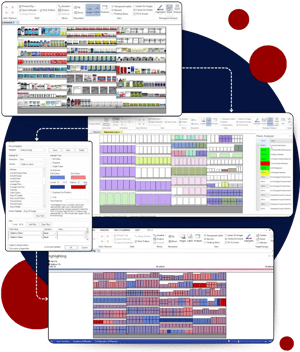
Within DotActiv’s AI platform, Luna automates the ongoing maintenance of planograms as products, sales data, and assortments change. Rather than requiring category managers to manually rebuild or refresh layouts, Luna updates planograms according to predefined schedules, highlighting additions, removals, and facing changes for review before implementation.
By automating routine maintenance, Luna helps retailers keep merchandising plans current across their store network, allowing category teams to spend less time on repetitive updates and more time making strategic merchandising decisions.
4. Security, Privacy, and Measuring Return on Investment
As retailers introduce more connected technologies into their stores, they must balance innovation with responsible governance.
Artificial intelligence creates opportunities to improve operational performance, but it also introduces new responsibilities around data protection, system security, and investment accountability.
Successful AI programmes are built not only on technical capability, but also on trust.
Measuring the Return on AI Investments
One of the most common questions retailers ask is whether AI delivers measurable commercial value. The answer depends less on the technology itself and more on how success is defined before implementation. Rather than evaluating AI as a standalone initiative, retailers should measure its contribution to operational outcomes.
Common performance indicators include:
- On-shelf availability
- Planogram compliance
- Stockout rates
- Sales per square metre
- Labour productivity
- Inventory accuracy
- Shrink reduction
- Customer satisfaction
- Queue times
- Promotion execution
- Category growth
Different AI initiatives will influence different metrics.
For example:
- Planogram automation may reduce planning time while improving merchandising consistency.
- Image recognition may improve execution visibility across store networks.
- Better forecasting may reduce stockouts and excess inventory.
- Dynamic pricing may improve markdown performance within selected categories.
The most successful retailers establish baseline measurements before implementation and monitor improvements over time rather than expecting immediate transformational results.
AI Is an Operational Investment, Not a Technology Project
Many AI initiatives fail because organisations focus on the technology rather than the operational problem they are trying to solve.
Successful retailers approach AI differently.
They begin by asking questions such as:
- Which operational processes consume the most manual effort?
- Where do we lose sales today?
- Which decisions could be improved with better data?
- Which activities create the greatest value if automated?
Technology then becomes the enabler, not the objective.
When AI is introduced with clearly defined business outcomes, appropriate governance, and realistic expectations, it becomes a practical tool for improving retail performance rather than another disconnected technology investment.
For retailers building the smart stores of tomorrow, that operational mindset will be far more valuable than adopting every new AI capability that reaches the market.
5. From Strategy to Execution: Turning AI into Measurable Retail Performance
Many AI initiatives begin with enthusiasm but struggle to deliver lasting value, because AI is introduced without a clear operational strategy.
Retailers often pilot multiple AI solutions independently, creating disconnected systems that generate more dashboards than decisions. Over time, teams become overwhelmed by data, while the operational processes needed to act on those insights never evolve.
Successful retailers take a different approach by viewing AI as an operational capability rather than a technology project.
Instead of asking, “Which AI tools should we buy?”, they ask:
- Which business problems are we trying to solve?
- Which decisions would improve if we had better information?
- Which manual processes consume the most time?
- How will we measure success?
The answers to these questions form the foundation of a sustainable AI strategy.
Step 1: Define Clear Business Outcomes
Every AI initiative should begin with measurable operational objectives. Rather than introducing technology because it is available, retailers should identify where AI can create the greatest business impact.
Common objectives include:
- Improving on-shelf availability
- Increasing planogram compliance
- Reducing manual planning time
- Optimising assortments
- Improving forecasting accuracy
- Reducing stockouts
- Increasing labour productivity
- Improving customer satisfaction
Starting with clearly defined outcomes ensures that technology investments remain aligned with commercial priorities.
Step 2: Build a Reliable Data Foundation
Artificial intelligence is only as effective as the data supporting it.
Retailers should establish reliable, governed data across core operational systems before expecting AI to deliver meaningful recommendations.
This includes ensuring data quality across:
- Product information
- Sales transactions
- Inventory
- Store hierarchies
- Floor plans
- Planograms
- Pricing
- Promotional calendars
Strong governance also improves consistency across departments, making AI recommendations more trustworthy and easier to operationalise.
Step 3: Connect Planning with Execution
Planning alone does not improve retail performance.
Execution alone does not improve planning.
The greatest value is created when the two continuously inform one another.
A modern retail workflow should create a feedback loop where:
- Category strategies define assortments and merchandising principles.
- AI accelerates planogram development and analysis.
- Stores execute approved merchandising plans.
- Shelf conditions are monitored and verified.
- Insights are fed back into future planning decisions.
Rather than treating category management as a once-off project, retailers establish an ongoing cycle of continuous improvement.
Where DotActiv Fits
DotActiv’s platform supports this connected approach through complementary capabilities that span the category management workflow.
- Nova is an intelligent planogram automation engine that transforms raw data and complex, retailer-defined merchandising rules into optimised, store-ready shelf layouts in minutes.
- Lola helps users access reports, category information, and operational insights more efficiently.
- TrueView provides visibility into shelf execution by verifying in-store planogram compliance from shelf images.
Together, these capabilities help retailers connect planning, analysis, and execution while maintaining human oversight throughout the decision-making process.
Step 4: Scale Responsibly
Many retailers begin their AI journey with a single pilot store or category.
This allows teams to validate operational improvements, refine workflows, and establish governance before expanding across larger store networks.
As programmes mature, retailers should continually evaluate:
- Model performance
- Data quality
- Operational adoption
- User feedback
- Business outcomes
Artificial intelligence should evolve alongside the business rather than becoming a static implementation. Continuous refinement is often what separates successful long-term programmes from short-lived technology initiatives.
The future of physical retail will not be defined by technology alone. It will be defined by retailers that use technology to make better decisions, improve operational consistency, and create better shopping experiences.
Artificial intelligence is already transforming many aspects of retail—from forecasting and merchandising to planogram automation, execution monitoring, and customer engagement. However, the greatest value does not come from adopting every new innovation. It comes from applying AI where it solves genuine operational challenges.
The most successful retailers share several characteristics:
- They start with clearly defined business objectives.
- They invest in reliable, high-quality data.
- They strengthen operational processes before introducing automation.
- They maintain human oversight over AI-driven decisions.
- They measure success through tangible business outcomes rather than technology adoption.
For category managers, retailers, and suppliers, AI represents an opportunity to spend less time on repetitive manual tasks and more time making strategic decisions that improve retail performance.
Building Smarter Stores Starts with Better Category Management
While smart stores incorporate a wide range of technologies, effective retail execution still depends on strong merchandising fundamentals and remains the foundation of successful physical retail, and AI is making it faster, more scalable, and increasingly data-driven.
Retailers that combine strong operational processes with practical AI capabilities will be best positioned to respond to changing customer expectations, improve profitability, and build more resilient store networks.
If your organisation is exploring how AI can improve category management, planogram automation, retail analytics, or in-store execution, the right starting point isn’t another dashboard; it’s a clear understanding of the operational outcomes you want to achieve. The technology should support the strategy, not define it.